
Both are popular ways to become a full stack developer. Here is a simple comparison of what you learn, where each is used and how to decide.
A full stack developer builds both parts of a web application: the front end that users see and the back end that stores data and runs the logic. MERN and Python full stack are two common ways to learn this.
What is MERN?
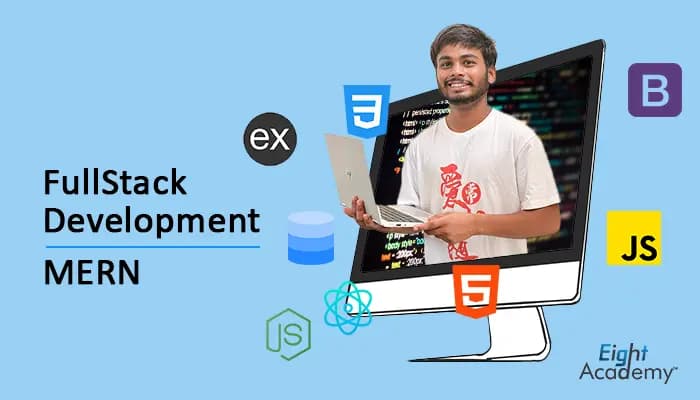
MERN stands for MongoDB, Express, React and Node.js. The big advantage is that you use one language, JavaScript, for everything – the website, the server and the database queries. MERN is widely used by startups and product companies for fast, modern web apps.
What is Python full stack?
Python full stack usually means HTML, CSS and JavaScript (often React) on the front end, with Python and a framework such as Django or Flask on the back end, plus a database like MySQL or PostgreSQL. Python is also the main language for data science and AI, so it opens more doors outside web development.
How to decide
- Choose MERN if you mainly want to build websites and web apps and like the idea of learning one language deeply.
- Choose Python full stack if you are also interested in data, automation or AI later.
- If you are a complete beginner, both are fine – the habits you build (practice, projects, Git) matter more than the stack.
What both have in common
Whichever you choose, you will learn HTML, CSS, JavaScript basics, Git, APIs and deployment. Many developers learn a second stack later, and it is much easier the second time.
Compare the syllabus of our MERN Stack and Python Full Stack courses side by side, or ask our counsellor for a free demo of each.
